Railway Accounts Department Examinations

Monday, March 3, 2025

Differences between SD and PG - Works Contracts


DIFFERENCES BETWEEN  ( In Works contracts)

Features

Security Deposit (SD)

Performance Guarantee (PG)

Object

In token for the due fulfilment of the contract

In token for the purpose of successful performance by the Contractor to execute the work. Introduced in lieu of risk action procedure (contracts rescinded due to failure of contractors) 

Due Date

EMD/Bid Security of successful tenderer will be retained as part S.D., balance will be recovered at the rate of 6 % of the bill amount till the full Security Deposit is  recovered,


Obtained from successful bidder after issuance of LOA, but within 60 days of issue of LOA.

a)      Within 21 days from LOA – No interest

b)      22 to 60 days from LOA – penal Interest 12 % per annum

Balance

Balance Security Deposit will be recovered only from the running bills of the  contract and no other mode of collecting SD shall be permitted

Submit the Performance Guarantee in any of the forms i.e., Cash, Irrevocable Bank Guarantee, Govt securities, DDs of nationalized banks, Post office SB deposit, NSCs etc.

If fails

There is no question of failing to submit the balance SD, because the same is recovered from running bills at the rate of 6 % of bill amount till the full SD is recovered.

In case the contractor fails to submit the requisite PG even after 60 days from the date of issue  of LOA, the contract shall be terminated duly forfeiting EMD and other dues, if any payable against that contract. The failed contractor shall be debarred from participating in re-tender for that work.

Releases

Can be released subject to

A. Physical completion of the work and Maintenance period if any.

B. After passing Final Bill

C. Obtaining the No Claim certificate from the Contractor

D. Obtaining the No Dues certificate against   Contractor from the Executive

Can be released immediately after physical completion of the work.


Tuesday, February 25, 2025

Book Examination Clause


BOOK EXAMINATION CLAUSE 

( IRS conditions of Contract 3300)


  Meaning: The government/Purchaser to call for and verify and examine the books of the contractor/Supplier is called Book Examination Clause.


  Books include Account books, vouchers, receipts, memorandum, paper or writing or any copy of or extract from any such document.


  Object: Verifying or ascertaining the cost of execution of the contract.


  When : before or after the prices have been finally fixed.


  Contractor's duty: Afford facilities to the Government Officer concerned to visit the Contractors works for the purpose of examining the processes of manufacture and estimating or ascertaining the cost of production of the articles. If any portion of the work be entrusted by a sub-contractor or any of its subsidiary, the authorized Government Officer shall have power to examine all the relevant books of such sub- books of such sub-contractor or any subsidiary shall be open to his inspection as mentioned in clause.


  Period: The Contractor or its agency is bound to allow examination of its books within a period of 60 days from the date the notice is received by the Contractor, or its agencies.


  If Contractor fail to produce the Books:  The purchaser can reduce the Contract price according to his best judgment.  The decision of the Purchaser in regard contract price is final and binding on the Contractor and his agencies.


  Result :  If on such examination, it is established that the contracted price is in excess of the actual cost plus reasonable margin of profit, the Purchaser shall have the right to reduce the price and determine the amount to a reasonable level.


****


Saturday, February 15, 2025

MBO - Management By Objectives - MA - Management Accounting


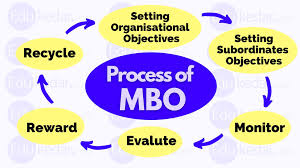
MBO - Management By Objectives


  • What is MBO ? MBO - Management by Objectives is a strategic management approach that aims to improve organizational performance by aligning individual employee objectives with the overall goals of the organization. 


  • Introduced by Peter Drucker in his 1954 book, "The Practice of Management,".


Key Steps:

  1. Define Organizational Goals: Management identifies the organization's overarching objectives, providing a clear direction for all departments and employees.

  2. Set Individual Objectives: Managers and employees work together to establish specific, measurable goals for individuals that align with the organization's aims.


  1. Continuous Monitoring: Regular tracking of progress ensures that both organizational and individual objectives are on course.


  1. Performance Evaluation: Assessments are conducted to compare actual performance against the set objectives.


  1. Feedback and Rewards: Constructive feedback is provided, and achievements are recognized, often through rewards or incentives.

Benefits of MBO:

  • Enhanced Communication: Promotes open dialogue between managers and employees, ensuring clarity in expectations.

  • Employee Motivation: Involving employees in goal-setting increases their commitment and motivation to achieve targets.


  • Alignment of Objectives: Ensures that individual goals are directly linked to the organization's mission, fostering a unified direction.

Limitations of MBO:

  • Overemphasis on Goals: Focusing too much on specific objectives may lead to neglect of other important aspects of performance.

  • Rigidity: The structured nature of MBO can sometimes hinder flexibility and adaptability in dynamic environments.


  • Short-Term Focus: There's a risk of prioritizing immediate objectives over long-term sustainability and innovation.

In the context of management accounting, MBO serves as a valuable tool by providing clear performance metrics and facilitating the alignment of individual efforts with financial and strategic goals. 

This alignment aids in budgeting, forecasting, and performance evaluation, ensuring that all organizational activities contribute effectively to the desired financial outcomes.


***